Showing posts with label Documentary. Show all posts

PSIFF AND SFFLA 2011: STEAM OF LIFE

A scene from Steam of Life.
Hot air

By John Esther

In the highly entertaining 1991 feature film, Night on Earth, one of the five segments is set in Finland. Unlike the previous four segments, which are variably comical, this one by writer-director Jim Jarmusch has two Finnish men lament away in a taxicab. The second monologue is more tragic than the first. Amusing and making a sort of "independent" film by ending on a down note, I think the scene lasts about 25 minutes. 

It was about 26 minutes into Joonas Berghäll and Mika Hotakainen's 84-minute documentary, Steam of Life, when I started to get bored.  

Set in a series of seemingly random saunas, various naked Finnish men deliver monologues about the some tragic tale: the loss of a loved one (alive or dead), a traumatic experience, personal problems, etc. Some of the men can tell their tale well, some of the men are clearly there to talk on cue, and other men are sometimes there to listen to his friend's problem – something many of them have seem to have heard numerous times already. 

Sure, there is something to be said about allowing a film of full of naked men into American theaters without garnering an NC-17 rating (Steam of Life is Finland's Oscar entry for Best Foreign Language Film to boot), and hearing men bare their calamities (and cocks) for all the world to view, and some of the sauna locations are humorous and there is even a bear here for laughs, but eventually the scenery and stories, well, run out of steam. 

Steam of Life will also screen at the Scandinavian Film Festival L.A. 


Read more

PSIFF 2011: WASTE LAND

Artist Vik Muniz in Waste Land.
Heaps of art

By John Esther

A few years ago, one of the better selling living artists in the world, Vik Muniz, left his adopted home in Brooklyn, New York, to return to his home country of Brazil for his latest project. Rather than find inspiration in the metropolitan cities of Brasilia, São Paulo or Rio de Janeiro (like Orson Welles), Muniz went to Jardim Gramacho.

Located on the northern outskirts of Rio de Janeiro, Jardim Gramacho is the world's largest garbage dump. Unlike the highly class conscious city of Rio De Janeiro where the extremely rich and the extremely poor are demonstrably demarcated by posh homes and pitiful favelas, Jardim Gramacho accepts all th(r)ash of life in the consumer culture age. It is located on the other side of Christ The Redeemer whose arms throw out blessings to the wealthy southern Rio de Janeiro residents from Corcovado Mountain. Behind the world's second largest art deco statue in the world (since we are talking art here) the arms of many flurry through the heaps of garbage for mere pittance. 

Known as catadores, these poor people do not just go through trash looking for food for a rich person's discarded treasure (although there are some of those), they pick and separate recyclable materials. 

When Muniz set out to paint the catadores he was expecting to find people beaten by the system, but what he found were many people with working class dignity. Women come here rather than prostitute themselves. Rather than enter the violent drug racket in Brazil, here men toil in trash in order provide for their large families. There are plenty of other things these people would rather be doing than picking through tons of waste (or a human body on occasion), yet they do see purpose in their occupation. As Brazil tears up the Amazon to the detriment of the world, these people are helping save the earth.

Because of what he found in these people who work the Jardim Gramacho, Muniz decided to recreate photographic images of the catadores out of garbage. The results are magnificent. Not only are the photos impressive works of art and meaning, they also transform everyone involved. 

A real crowd pleasing documentary destined for Oscar nomination, Lucy Walker's Waste Land is a surprising joy about finding pride and purpose in one of the most unlikely places in the world.

Recommended.

Read more

FILM REVIEW: COOL IT

Bjorn Lomborg in Cool It.
Cap and trade on fear

By Don Simpson

Ondi Timoner's documentary, Cool It, follows Danish author and scholar Bjorn Lomborg (The Environmental Skeptic; Cool It: The Skeptical Environmentalist’s Guide To Global Warming), a gadfly to many environmentalists, who contends that though global warming does exist, our environmental situation is far less grave than the fear propaganda of "alarmists" such as Al Gore lead us to believe. Lomborg refutes four of the scariest “facts” presented by Gore’s An Inconvenient Truth while also criticizing the all-talk and no-action of international conferences (such as the 1997 Kyoto Protocol and the 2009 Copenhagen Summit) which proposed outlandish actions (such as Cap and Trade and Carbon Taxing) that would cost billions and have very little positive change.

Cool It ponders whether the current budgets allocated towards climate change, global poverty, clean drinking water, education and disease could be spent more wisely. Lomborg reasons that rather than focusing on controlling carbon emissions, we should research how new energy strategies (solar, wind, algae and wave power) can be made more affordable and practical than coal and oil. Lomborg also asserts that we should simultaneously develop strategies via geo-engineering to protect the world from the effects of global warming as well as focus on fighting hunger and disease to create a better present (and future) for the world’s population. His calculations are never clearly explained, but Lomborg suggests that a yearly budget of $250 billion would address all of these problems worldwide.

Most of Lomborg’s assertions and theories are quickly glossed over -- with an occasional talking head expert popping up onscreen for a minute or two to add some legitimacy to his opinions (Stephen Schneider appears as Lomborg’s only worthwhile opposition). Rather than focusing on the scientific facts and clearly explaining Lomborg’s theories surrounding global warming, Timoner approaches Cool It with the assumption that she must dedicate a significant amount of screen-time merely to convince us that Lomborg is a trustworthy subject. Cool It spends way too much time (approximately 20 minutes) at the onset of the film explaining how Lomborg was censored for scientific dishonesty in what seems like an attempt to offer him up as a martyr for environmentalism (Lomborg was eventually exonerated in Danish court from the accusations); then, the remaining 70 minutes of the film is saturated with even more obvious attempts to depict Lomborg as the good guy. If only Cool It would focus less on Lomborg and more on Lomborg’s ideas. I also find it very frustrating that most of Lomborg’s actual ideas regarding global warming are conveyed via a classroom PowerPoint presentation (an uninspired mimicry of An Inconvenient Truth).

Personally, I tend to agree with many of Lomborg’s opinions about global warming (or, as I prefer, climate change). First and foremost, I detest the politics of fear. I also tend to doubt the true effectiveness of carbon taxing or Cap and Trade legislation, especially as the sole solution. I agree that most people are hesitant to change -- especially if it adversely impacts their accustomed standard of living -- and the only real way to eradicate the world's reliance on fossil fuels is to create cheaper and cleaner alternatives. (Carbon taxing will never work for developing and third world nations.) This places the entire burden of global warming on the shoulders of the world’s scientists and the governments and investors who fund their research and development.

Where I tend to disagree with Lomborg is that I believe that we do have a role that we can play as individuals. Lomborg blatantly mocks Earth Hour and small lifestyle changes -- such as switching to energy efficient light-bulbs or driving hybrid vehicles -- as being ineffective. In my opinion (disclaimer: I am not a scientist), these little lifestyle changes will begin to add up as more and more people make cleaner and more efficient energy decisions. Sure, celebrating one Earth Hour per year does not actually do much good in the grand scheme of things, but it does increase humankind’s awareness that we do not need to constantly consume energy in order to survive -- we can take a short break now and then (and we should take that break more often than one hour per year). Until the average person can afford to switch to clean energy, I do not think it would hurt to promote lifestyle changes that are earth friendly and economically beneficial no matter how minuscule.
Read more

ANAHEIM INTERNATIONAL FILM FESTIVAL: UNDER THE BOARDWALK THE MONOPOLY STORY


Filming Under the Boardwalk. Photo credit: Michael J Maloney.
Getting board not bored

By Miranda Inganni

I must admit that I was underwhelmed at the thought of viewing (much less reviewing) Under the Boardwalk: The Monopoly Story. Eighty eight minutes later, I was refreshingly glad I saw co-writer/director Kevin Tostado's documentary and wished that I had my old Monopoly game to whip out and play.

Delving into the history of Monopoly (created by a woman, sold by a man!), its 75 year international success (used to help American and allied POW's during World War II!) and spotlighting the most recent Monopoly World Championship held in Las Vegas, NV (ESPN actually covered it!), this sweet, geeky, thorough documentary is an homage to the game that has been a family favorite dating back to before the Great Depression.

Highlights include candid interviews with past and present US and international champions and competitors. And boy, what a group it is. From the elementary school teacher in California who uses the game to teach his students math, to the salty and rather sanctimonious guy who thinks he's going to win the championship (if he doesn't he'll be damned if the schoolteacher does!), the movie provides a glimpse into what makes Monopoly lovers tick. (Hank Azaria is a fan of the game, too!)

Honestly, the documentary got me fired up. I wanted to gather around the game board with my family and wheel and deal like we used to growing up. I must buy more hotels! I will bankrupt my older brother and win!

Coincidentally, McDonalds is running its promotional Monopoly game right now, which I have always thought I would eventually win. You can use the real prize money to pay for the liposuction after all those 1/4 pounders with cheese!

(Under the Boardwalk: The Monopoly Story screens Oct. 15, 4 p.m.; Oct. 17, 7 p.m. For more information: http://anaheimfilm.org/films/under-the-boardwalk-the-monopoly-story)
Read more

FILM REVIEW: NUREMBERG


Director Stuart Schulberg at the Stuttgart premiere of Nuremberg in the the 1940s.
War and pieces

By Don Simpson

Commissioned by Pare Lorentz (head of Film, Theatre & Music at the U.S. War Department’s Civil Affairs Division), Nuremberg: Its Lesson for Today was written and directed by Stuart Schulberg (of John Ford’s Office of Strategic Services Field Photographic Branch/War Crimes Unit). Completed in 1948, Nuremberg: Its Lesson for Today was never released in U.S. theaters (reportedly in an effort to not distract Americans from their newly found hatred of Communism), but it was shown in Germany as part of the Allies’ de-Nazification campaign.

Newly restored by the original director's daughter, Sandra Schulberg, along with Josh Waletzky, a new 35mm negative was created from the best existing print at the German National Film Archive and the soundtrack was reconstructed using original sound recordings from the trials. Liev Schreiber also provides narration. The resulting restoration -- concisely titled Nuremberg -- is a priceless historic artifact that, in keeping with its original newsreel aesthetic and tone, concisely documents the Nazi war crimes and the subsequent Nuremberg Trials.

In the extremely rare Nuremberg trial footage, eleven Nazi war criminals -- including Martin Boorman, Hans Frank, Hermann Göring, Rudolph Hess, Alfred Jodl and Albert Speer -- sit in the courtroom, hiding behind dark sunglasses. Prosecuting attorneys support their accusations with vehement yet poetic speeches; defense attorneys attempt to plead the innocence (or at least naivety) and regret of their clients; and the defendants offer feeble pleas of contrition.

Craftily utilizing footage from Nazi propaganda films, but this time the footage is edited from the point of view of the Americans, Nuremberg traces Adolph Hitler's aggression from the Reichstag fire through the Anschluss and the invasion of Poland while pausing to contemplate the ultimate horrors of the Nazis' industrialization of death -- from the Holocaust to the euthanizing of Germany’s own aged and disabled (the "useless eaters"). The Nazi’s own propaganda films thus provide indisputable evidence of their war crimes; the remaining question for the judges is how to most appropriately delegate the guilt and determine the most suitable punishment.

Nuremberg concludes with a sound bite from Justice Robert H. Jackson’s closing statement from the trial: “Let Nuremberg stand as a warning to all who plan and wage aggressive war.” In this context, the Nuremberg trial seems to have failed. Aggressive wars have been waged since the Nuremberg trials, yet no one has been punished. (What about the Iraq War?) The atomic holocausts of Hiroshima and Nagasaki must have been fresh on everyone’s minds at the time of the Nuremberg trials, but no one was punished for those horrendous acts. This leads me to wonder what Jackson’s definition of “aggressive war” might be?
Read more

FILM REVIEW: RACE TO NOWHERE

A scene from Race to Nowhere.
Shallow grade

By Aja Davis

In Race to Nowhere, rookie filmmaker Vicki Abeles tries to sum up an extensive problem that affects overachieving scholars trying to get into a “good” college.

Stress, eating disorders, sleep deprivation and cheating are just a few of the problems that can occur. Others have physical and mental breakdowns when they fail.

Some of these kids are molded from an early age, too young to have their innocent minds forced to think two and three years older than his or her age.  We look at cases like the Jon Benet Ramsey and pageant stories as controversial, as exploitation, as abuse. Critics say pageants force young children to grow up way too early. What about parents forcing their children to take on too much before they are mature enough to handle it? They are stealing their adolescence and replacing it with fears of failure. This in return turns the children into slaves to homework, tests, and reaching for something unattainable, perfection. Is this not abuse?

Parents, children, teachers, doctors, and experts give us their take on this situation. The children are trying to succeed because of pressures from their parents and society. The school is more concerned with academic achievement and not teaching how to become a productive citizen or fostering social skills. Many of the students complain of engaging in exhausting late night homework sessions without eating and still not finishing the heavy workload. Some of the educators spoke out against their school’s way of thinking, concerned that the students are being taught to wedge huge amounts of information in their heads for the sake of only passing a test. One of the students expressed that he forgets the information as soon as the test is over. What good is it if a student is not retaining it? Well to that child it is okay because he achieved the goal of passing. There are a few educators who suggest that getting rid of homework will indeed improve student grades, anxiety, and the pressure of performing well.  

With standardized tests under the former President Bush's No Child Left Behind policy, many college educators are realizing that these students are not prepared for college. They are not prepared to learn, socialize, or deal with real issues and are dropping out. 

The documentary makes some valid points, but there seems to be something missing. Throughout the film only two of all the students who speak are from a minority group. Race to Nowhere is missing the point of view of inner city kids and families. Does this suggest that these kids are not in the running with suburban children or that they are not college bound?  Hardly a true depiction of every type of child in America, Race to Nowhere seems to try and make you believe that this is happening with all children. There is no doubt that these stories were true, but it does not make the A grade. After building my interest up in the beginning the 85-minute documentary dragged on. It felt like a race to nowhere.
Read more

FILM REVIEW: WAITING FOR SUPERMAN

Working class hero: Geoffrey Canada in Waiting for Superman.
Ed-You-ca(n’)t/e-a-nation

By John Esther
 
Focusing on five endearing underprivileged children -- Anthony, Bianca, Daisy and Francisco -- plus teachers, dedicated educators like Geoffrey Canada, administrators, teacher unions, parents and a plethora of mixed meritorious experts analyzing the dismal conditions of a public educational system, the Oscar-winning documentarian of An Inconvenient Truth (2006), Davis Guggenheim, takes a look at how the United States of America fails to educate a lot of its children.
 
Applying a somewhat rather simplistic narrative based on a lot of empirical evidence, some startling documentation, and the questionable attributes of teacher unions, co-writer and director Guggenheim (It Might Get Loud) and others not only can cite what is wrong with the U.S. educational system, but also offer possible methods to make it better. And it does not require a superman, just the social and political will.

It is a lot to take in and it is a lot to get mad about. There are people, including precious schoolchildren, who truly want kids to receive a great education but, due to a barrage of circumstances, they will never get it. For starters, kids have problems at home, schools are overcrowded, children lack respect for legitimate forms of authority, kids are passed on in the name of government funding, too many teachers are undeservedly tenured and resources are not properly allocated to education.

It is also heartbreaking to the point that you could, or wish you could, attain that teaching degree, get to that needy school and show the other teachers how it is done.

Sure to be a darling in politically conservative circles, Waiting for Superman certainly works on an emotional one and often an intellectual one as well. However, Waiting for Superman is not without its shortcomings.

The documentary creates a brief historical narrative on the role of education in 20th century America, talking about how superior it was until the 1970s when it started to deteriorate. What happened in the 1970s is not discussed. California’s Proposition 13 (1978) may be a good start.

(Guggenheim’s father, Charles, the most honored documentarian in AMPAS history, directed the 1983 Oscar-nominated documentary, High Schools, which looked at the public educational system in the 1980s.)

Another problem is the documentary’s failure to address a country with a notorious history and au courant dose of anti-intellectualism. In an era where an Ivy League education is often viewed as a flaw in character (and I do not mean in the Gore Vidal sense where an Ivy League education is still an under-education or a mis-education or a miso-education), superstitions supercede science, real intelligence is met with suspicion, and a fool (or propagandist) is allotted the same amount of space in the media to spew out nonsense on a matter as an expert on the same subject has made making a responsible case (i.e. climate change; healthcare reform; capital punishment), the public education system can only do so much.

Then there is the issue of influence in politics. Waiting for Superman takes its time tackling the American Federation of Teachers for its considerable influence in politics, and not without undue course, either. But what it fails to account for is those other special groups whose monetary interests depend on the continuation of an undereducated working class. These special interests lobby hard in state and national capitals for such policies as lowering those taxes funding public education, preventing the school year from expanding, Wall Street bailouts, handing over public programs to the private sector and maintaining the prison-industrial complex -- which goes hand in pocket with low education standards. (As of 2007, the very blue states of Vermont, Michigan, Oregon, Connecticut and Delaware, respectively, have the dubious distinction of spending more money on prisons than state colleges.)

To be sure, although Waiting for Superman is far from addressing it, the educational system of America and everything else weak about our nation will never significantly improve without drastic campaign finance reform.

Waiting for Superman also takes a rather kindhearted, if not whitewashed, viewpoint of charter schools. The documentary glosses over the poor achievement of most charter schools despite ample research illustrating that most charter schools perform lower or just as comparable as general public schools. It would also be interesting to know how non-union charter schools fare against public schools (and union pay) over time. Do they work better in the long run or not? I would imagine the latter. At any rate, Waiting for Superman, like many parents and students who have little or no options, considers non-union charter schools to be the answer. This is good publicity for some highly respectable educators at charter schools, but it may just be wishful thinking for the parents whose children will wind up just as intellectually impoverished as their parents whether the kid’s name is drawn in a charter school lottery or not. (As the director readily admits in Waiting for Superman, his wealth permits choice.)

A documentary sure to stir up some heated debates, especially amongst those with more disposable income than others, Waiting for Superman is an important yet definitely flawed discourse on the current courses America’s public educational system is taking, making, faking and breaking.
Read more

FILM REVIEW: CATFISH

Henry Joost and Ariel Schulman in Catfish.

Outsid(h)er art
 
By Don Simpson
 
In the case of Catfish, I beg for you to not read anything about the film before you see it. No matter how ambiguously I pen this review, I fear that there is no way to discuss Catfish and not destroy your viewing experience. So, this will be my final plea for you to stop reading and come back to JEsther Entertainment after you see the film.

OK, so I am now going to assume that those of you who are still reading this review have either already seen Catfish or you are not afraid of learning too much information about the film. Everyone else should have stopped reading by now. OK. Good. There will be spoilers coming very soon...

In 2007, the co-producing/co-directing team of Henry Joost and Ariel Schulman began filming a documentary of Ariel's younger brother, Nev, a dance photographer, as he developed a Facebook friendship with a prepubescent art prodigy named Abby. The friendship was originally instigated by Abby when she sent Nev a painting of one of his photographs; it quickly escalated to Abby mailing boxes of her work to Nev. Nev’s Facebook relationship with Abby seems very intriguing to Joost and Schulman, but they presumably never suspected that the relationship would take the strange directions that it does...

Nev promptly becomes Facebook friends with Abby's mother, Angela, and Abby’s sultry older half-sister, Megan; soon Nev is connected with an wide assortment of other family members and random family friends. It is only right and natural that Megan and Nev commence a virtual Facebook flirtation which quickly evolves to cover the gamut of modern communication: texting, IMing and good old fashioned phone conversations. Megan, an amateur musician, begins writing songs for Nev and posts the new MP3s to her Facebook page.

Things suddenly begin to unravel. Nev, horrified and humiliated, becomes reluctant to continue the documentary. Ariel and Henry urge him to continue -- they realize that they have hit a cinematic goldmine. One thing leads to another and the three guys arrive in Michigan -- with cameras blazing -- to confront Megan, Angela and Abby. They arrive to find a very ordinary and soft-spoken middle-aged housewife who has woven her lifelong fantasies into a complex network of Facebook facades, all to attract and retain Nev's attention. Vulnerable and sympathetic -- though prone to lies and gross exaggerations -- it seems she merely longs to be able to sell her paintings; and posing as a very young outsider artist seemed like her best option to do so.

Somehow this strange woman, who has done nothing but lie to Nev, transfixes him and wins his sympathy. Nev seems to think that since Angela’s reality is so depressing that gives her ample reason to fabricate a more exciting existence. I find it to be very difficult to agree with Nev on this, but I wonder if he feels equally guilty for using Angela in this film.

Catfish is an extremely potent critical analysis and philosophical diatribe on modern communication and the necessary rewriting of social rules and morals associated with 21st century relationships; it is all enough to give Marshall McLuhan a virtual post-mortem orgasm. In fact, it is almost too potent and too perfect (so much so that it is tempting to assume that this is all just a elaborately constructed post-modern ruse a la Banksy’s Exit Through the Gift Shop). But if it is true that this entire documentary is essentially a mockumentary, well, Joost and the Schulman brothers deserve even greater kudos for pulling off such a wonderfully transfixing prank.

My favorite part of Catfish is that it opens to the score of “Good Vibrations” by The Langley Schools Music Project -- an alluring example of outsider music created by children which works as a perfect introduction to this film about a child outsider artist. (The remaining soundtrack is courtesy of Mark Mothersbaugh of Devo fame).

Read more

EXCLUSIVE INTERVIEW: TOM SHEPARD

Harmain Khan in Tom Shepard's Whiz Kids.

Science function

By John Esther


At a time when American teens rank 24th in the world in math and science comes Whiz Kids, Tom Shepard’s delightful documentary about three 17-year-old high school students -- Ana Cisneros, Harmain Khan and Kelydra Welcker -- who compete for the Science Talent Search. The nation’s oldest and most prestigious science competition, these working-class teenagers need some of that precious Science Talent Research prize money in order to afford college


A Science Talent Search finalist himself in 1987, Shepard moved to filmmaking during his years at Stanford. His previous credits include, Scout’s Honor, about gays in the Boy Scouts, and Knocking, a film about Jehovah Witnesses.

Currently living and working in San Francisco, we caught up with Shepard to talk about science, storytelling and red harvester ants. 

JEsther Entertainment: I understand you were in the Science Fair back in 1987 doing something about harvesting ant pheromones?
Tom Shepard: [Laughs]. Yes, I was actually cutting the abdomens off of red harvester ants in Colorado Springs, playing with their pheromones. I was quite the science geek when I was kid. 


JE: How did you mesh the majors of biology and film at Stanford? 
TS: I know there was some research done about those who were finalists in the Science Fair and is was like eighty percent or more of them go on to PhDs in sciences, doctors, working in labs. I felt oriented in that direction when I went to college – maybe I felt a little obligated. Then I took cultural studies courses -- GLBT studies, film studies, African-American studies – and it was more interesting to me. I was definitely more interested in telling stories. I had already taken all the pre-med courses so it was easier to tack on the film degree than scrap the courses.
 

JE: Did you approach films from a biological for scientific perspective?
TS: Only to the extent I took some ethnography classes that were a little bit more like cultural anthropology. That was as close as I got to “scientific” filmmaking. 


JE: In light of the processes of hypothesis, research and documentation, it seems more natural you would make documentaries rather than fictional features.
TS: I think so. I feel like the chance to make changes is greater. Educate people and open hearts at the same time.


JE: You mentioned that before in something I read. Do you find science is often too cold?
TS: I did not learn in a cold, dispassionate way. I learned it in communal ways and going to science fairs. It was always really engaging, working in the lab. We hoped one of the outcomes of Whiz Kids is to humanize science, make it more accessible. We would have work-in-progress screenings of the film and really educated people would come and they would start to hear kids talk about a level of his or her research and you could see the eyes start glossing over. That’s really unfortunate. Look at the issues Whiz Kids raises and issues we’re now suppose to debate. The BP oil spill is a really good example. If you have a background in science, you might know how you want your congressperson to deal with it. It has changed since the time I was in college. Beforehand there was an emphasis on having kids specialize very early and then you go into a PhD program and you are the expert in some very specific, nanotechnology -- at the expense of seeing the larger picture.
 

JE: Why did you pick these three students in particular?
TS: We were drawn to these kids because they didn’t have those sorts of opportunities and yet there were doing it on their own. They had family and mentors but they were largely pursuing this on perseverance and deep belief in themselves -- that what they were doing mattered. They didn’t come from environments where there had been traditions. 


JE: The film argues we also need to get this country back into a more scientific mode.
TS: Yes, we do need to increase the number of engineers and chemists, but we need to make the whole of society more technically literate -- make science more accessible at an early age. Science is a really cool thing. It’s so creative, intellectual and engaging on so many fronts.

JE: Lastly, what do you think about interviews where you talk about yourself and your work? Do they serve the work? Should the work speak for itself?
TS: That’s an interesting question. It’s great to have both things. The work should speak for itself, but oftentimes a work that’s reduced to an hour or 90 minutes raises more questions than it answers. That’s why people love going to film festivals. They love to talk about film or the filmmakers and understand the choices you made and what would you do in the future.

For information on how to order a DVD or upcoming screenings, go to http://whizkidsmovie.com

 
Read more

FILM REVIEW: QUEST FOR HONOR

There is no missing misogyny in Quest of Honor.

Shame and blame

By John Esther

While four women are killed everyday in the United States due to domestic abuse, in countries such as Iraq, Turkey, Jordan and Iran there is a dis-stink-t rise in dishonorable "honor killings."

Often a price to be paid for the alleged transgressions of female sexuality, or to pay the price for some act committed by a male member of the family, or because of some false accusation by someone in the community, young daughters, sisters, mothers and wives too often pay the ultimate price to preserve some so-called family honor. While one is inclined to laugh at such stupidity, reality is too grossly unjust and usually neither swift or painless, either, to even garner a smile.

Fighting years of tribal mentality, the laws of Iraq's Kurdish Regional Government demands it end the sacrificial ritual, but with little sincerity and less effect. To assist the powers that allow the female populace to bleed to death, The Woman's Media Center of Suleymaniyah, Iraq, provides aid -- often at the considerable personal expense of the women involved -- by pushing the buttons of justice.

As the 64-documentary weaves between positive action and gross ignorance/indifference, filmmaker Mary Ann Smothers Bruni paints a picture of a few women (most women here play a part in their own subordination) fighting against an uncultured culture where females remain second class citizens, whose lives mean nothing if they do not serve patriarchy.

Engaging, and sometimes so enraging one considers sticking his or her hands through the screen and choking some of these misogynistic idiots, Quest of Honor is not for the timid, but rather for the indifferent as well as the committed.
Read more

FILM REVIEW: ENEMIES OF THE PEOPLE

In time and sequence, paraphrased: Nuon Chea in Enemies of the People.

Horror has more than one face

By John Esther

Like many of my generation, my very first introduction to the atrocities in Cambodia during the mid-late 1970s was due in thanks to Dead Kennedy’s “Holiday in Cambodia,” an indictment against cruelty in Southeast Asia (not just about Cambodia, the single's cover image depicts violence in Thailand) and a ferocious satire on bourgeois American consumerism and obliviousness.

Released in 1980, the lyrics of “Holiday in Cambodia” specifically addressed the horror of Cambodia’s diabolical leader, Pol Pot, and the soldiers backing his belligerent ways from 1975 to the very bloody end in 1979:

‘Well you’ll work harder
With a gun in your back
For a bowl of rice a day
Slave for soldiers
Til you starve
Then your head’s skewered on a stake’

But those angry words could only attempt to “describe the horror for those who do not know what horror is.” While a few Cambodians tried over the years to shriek back against the country’s historical heart of darkness and the internal nemesis of Cambodian against Cambodian, it is only perhaps now we have an understanding of those times with the release of co-directors/producers Rob Lemkin and Sambath Thet’s Enemies of the People.

“Nobody understands why so many people were killed at that time,” says Thet during the documentary’s introduction.

Winner of Sundance’s 2010 World Cinema Documentary Special Jury Prize, Thet, a Cambodian journalist, spent a decade tracking and talking to the men and women behind the atrocities, slowly getting them in front of the camera.
Fueled by pseudo communistic propaganda and the fear of Vietnam's moderNation, Cambodian peasants killed innocent people (there were no trials) by the hundreds of thousands, until their hands hurt, rather than say no. Those who hesitated in his or her socialist nationalistic duty were told to kill or be killed.  

Faced with the camera and eventual death, from elderly uneducated farmers in the Northwest provinces to Nuon Chea, AKA Brother No. 2, the man closest to Pol Pot (who died under suspicious circumstances April 15, 1998), everybody has a horrible justification for what was done in the name of survival and they, he and she know it.

Beyond the amazing access Thet achieves, what furthers the value of Enemies of the People is how he maintains his composure in the presence of dumb, duplicitous and demonic people -- the kind of dumb, duplicitous and demonic people who killed his father before forcing his mother into marital slavery where she died giving childbirth to the collective rapist. Later, Thet lost his older brother to the violent riot of rouge. Thet is not out for revenge, but for the kind of comprehension and reconciliation we have seen in other countries where atrocities took place in recent history (e.g. South Africa, Rwanda). Thet’s supreme quest to seek out and document the truth is a testament a better tomorrow is possible. Occasionally, a few of the best do survive genocide.

Set against this personal-political backdrop, international pressure is mobilizing to have Khmer Rouge officials arrested for various crimes and tried by the Extraordinary Chambers in the Courts of Cambodia, a United Nations-backed tribunal. The octogenarian Nuon Chea’s case begins next year.

If Enemies of the People has one great drawback is that it allows Thet to narrate his story in his very poor English. It is so poor there are English subtitles to accompany him and some of the things he says are clearly not exact. The documentary has plenty of people contradicting themselves and Thet does not appear to be one of them, so why let a foreign tongue slip? Since there are already subtitles for the Cambodian dialogue, it was rather pointless for Thet to narrate in English. At any rate, one learns more Cambodian history during the Cambodian dialogue.

A lesson in killing and dying for the wrong reasons, Enemies of the People is a stark reminder that in the end, for most of human un-kind, self-preservation wins the day and while history can be a cold judge, the planet's killing fields continue to grow.


Read more

LA FILM FESTIVAL 2010: WHERE ARE YOU TAKING ME?


Some kids and a camera.

To Rotterdam and then Los Angeles

By John Esther

Mixing styles reminiscent of Michelangelo Antonioni, Robert Bresson and Chris Marker, Kimi Takesue’s documentary about life in Uganda ripples with poetic complexity as it simply puts the camera on its subjects and lets the images express a harmonious connection between filmmaker, subject, and viewer.

Saying much with little dialogue, Takesue introduces us to such ordinary places as a hair salon, a martial arts dojo, a rock quarry bustling with child labor, a youth center where kids learn to bust a move, and the Entebbe Zoo where there were curious kids in attendance. Subjects often mundane in the hands of a lesser filmmaker or lesser surroundings, Takesue captures the beautiful and bold style of Ugandans -- what with the typical bold pinks, lavenders and whites of their clothes which shine under their genuinely warm smiles.

Not to be content with the usual, Takesue also shows the viewer other particular events like an Africa woman’s power lifting contest, a lavish Ugandan wedding (the groom and bride’s conflicting expressions are priceless), a VJ translating a “Bruce Lee” film to the local Lugandan language and local Ugandan independent filmmakers on set.

There is also more serious note when the documentary arrives at Hope North, a school providing school and home for children displaced by the civil war in North Uganda. Some of these children were abducted and coerced into the army, forced to kill if they did not kill. The school helps them recover from the traumas such situations summon.

Running a brief 72 minutes, Where Are You Taking Me? -- a question asked by some of the subjects but also a questions a viewer essentially asks before seeing a documentary – is, for the most part, a real pleasure to watch. This Documentary Competition item does get a bit mawkish at the end.

Recommended.

(Where Are You Taking Me screens June 20, 7:30 p.m., Regal Cinemas; June 21, 9:45 p.m., Regal Cinemas; June 24, 5:15, Regal Cinemas.)


Read more

FILM REVIEW: CASINO JACK AND THE UNITED STATES OF MONEY

Making money is faking sense: Jack Abramoff is Casino Jack.

This land is their land

By Don Simpson


Before Jack Abramoff became a highly influential and grossly corrupt Washington D.C. lobbyist for the Preston Gates & Ellis and Greenberg Traurig firms, he was the esteemed Chairman of the College Republican National Committee (1981-1985); and while Chairman, Abramoff is credited for making the College Republicans more activist and more conservative than ever before. It is also worth noting that Grover Norquist served as Abramoff’s executive director and Ralph Reed was hired as an unpaid intern –- the infamous Abramoff-Norquist-Reed triumvirate was thus formed. Other highlights on Abramoff’s resume: in 1985, he joined Citizens for America, a pro-Pres. Reagan group that helped build support for the Nicaraguan Contras; he also tried his hands at cinema –- writing and producing the anti-communist diatribe, Red Scorpion (starring Dolph Lundgren), which was released in 1989.

We all know something or other about Abramoff’s career as a lobbyist. Thanks to the “maverick” John McCain, we know that Abramoff conned wealthy Native American tribes while lobbying for legislation related to their casinos. Abramoff also developed an elaborate scheme concerning sweatshop labor in the Commonwealth of the Northern Mariana Islands (CNMI); he matched Tom DeLay (who later went on to star in Dancing with the Stars) with the Executives of Naftasib (a Russian energy company) who needed DeLay’s support in making it possible for the IMF to bail out the Russian economy; he was hired by Tyco to lobby Congress and the White House on Tyco's Bermuda tax-exempt status. The list goes on and on and on… For each of his lobbying jobs, Abramoff funneled millions of dollars from his clients to the deep pockets of influential politicians. Abramoff personified the power of money in politics.

Alex Gibney’s documentary provides a very detailed look at Abramoff’s history and grants us a pretty solid understanding of who Abramoff really is. Gibney interviews several of the key players in the Abramoff saga (many of whom were found guilty for their involvement with Abramoff) and whomever he does not have access to interview (most notably Abramoff and DeLay) Gibney utilizes stock footage which is then able to speak for itself. All of the talking heads are relatively upfront and frank with Gibney, which is where some of the most insightful information about Abramoff is revealed. I’m not typically a fan of talking head documentaries, but no other documentary filmmaking technique would have worked quite as well with this content.

The greatest takeaway from Casino Jack and the United States of Money concerns just how influential some lobbyists can be. They allow the corporations and individuals with the most money to have tremendous influence on politics in the United States. I don’t recall that Gibney ever makes reference to the evil “O” word (oligarchy); but Casino Jack and the United States of Money provides indisputable evidence that the Unites States is not a democracy or republic, it truly is an oligarchy. Thanks to loose campaign finance laws (made even more lax by the Supreme Court, supposedly in the name of “free speech”), money is able to get the financial elite’s choice of politicians elected; and thanks to the efforts of lobbyists, money is able to get the financial elite’s choice of legislation passed. If you’re hoping for change, well…one thing we should have all learned by now is that no matter how adamant a presidential candidate is about the subjects of campaign finance reform and curtailing the power of lobbyists, a politician is not going to bite the hands that are feeding him or her.

By the way Casino Jack and the United States of Money is the first of two films about Abramoff to be released this year. George Hickenlooper’s bio-pic starring Kevin Spacey in scheduled for release in Octover 2010.
Read more

FILM REVIEW: UNTIL THE LIGHT TAKES US


Satyricon rocks Until the Light Takes Us.
 
By Don Simpson 

During the 1980s, a generous handful of thrash metal bands began paving the road for black metal. This "first wave" featured bands such as Venom (whose 1982 album was titled Black Metal), Mercyful Fate, Bathory and Celtic Frost. Anti-Christian themes were prevalent as was unpolished (“lo-fi”) and minimalist recording production. Bathory is oft-cited as the first to feature “shrieked” lead vocals. Black metal musicians adapted menacing psuedonymns; some began to sport the now iconic corpsepaint.

In the Early 1990s, Norwegian bands such as Mayhem, Burzum and Darkthrone carried the burning torch of the "second wave" of black metal which truly solidified the scene into a distinct musical and sociological genre. Awash with high gain tones, abundant distortion and fast tremolo picking, black metal guitarists utilize certain scales, intervals and chord progressions to produce the most dissonant and ominous sounds possible. Blatantly deviating from conventional song structure -– utterly void of verse-chorus sections –- black metal typically features extended and repetitive instrumental sections.

And then the churches began to burn. The black metal scene was presumed responsible for the arson of more than fifty Christian churches in Norway between 1992 and 1996. One of the most noteworthy churches that was reduced to ashes by black metal was Norway's Fantoft stave church. Originally constructed in Sognefjord around the year 1150, it was relocated to a location in Fantoft in 1883 that was rumored to have deep ancient significance to Norse pagans.

The spate of church burnings –- as well as three grisly deaths –- garnered high profile international media attention for the black metal scene, showcasing a nihilistic rampage of satanically-minded youth. Despite the unbridled onslaught of negative publicity, this once underground scene in Norway quickly gained notoriety resulting in skyrocketing record sales worldwide.

Co-produced and co-directed by Aaron Aites and Audrey Ewell, Until the Light Takes Us focuses primarily on two of the most prominent “second wave” musicians: Varg Vikernes (“Count Grishnackh”) and Gylve Nagell (“Fenriz”) the two representing the yin and yang of black metal.

We follow Nagell as he rides trains, walks the streets of Norway, sits in his apartment and attends art installations all the while ruminating on the “lo-fi” recording techniques and philosophy that his band Darkthrone abides by. For Nagell, black metal is purely about the music –- more specifically, its easily identifiable sound. While Darkthrone has profited from all of the press surrounding black metal, Nagell purposefully maintains a safe distance from the negative actions of the scene. All in all, Nagell seems like a very nice guy albeit with a nihilistic and misanthropic slant.

Vikernes, of the one-man band Burzum, is interviewed solely in a bright and cheery prison room while serving a maximum sentence (in Norway the maximum sentence is 21 years) for the 1993 murder of the lead singer of Mayhem, Øystein Aarseth (“Euronymous”), and multiple arson charges (including that of the Fantoft stave church). It is readily apparent that Vikernes considers himself to be the philosopher king of the black metal scene; he comes across as well-read (especially in Norse mythology and its apparent destruction at the hands of Christians) and intelligent.

In the spring of 2009 (after Aites and Ewell’s film was completed), Vikernes was released on parole after having served almost 16 years of his 21-year sentence. He promptly announced a new album – The White God – offering a blunt reminder that the white power and homophobic schizophrenia of black metal is left unexplored in Until the Light Takes Us. There is no mention that Vikernes has been identified as a Nazi throughout most of his life, or that while in prison he coined the term "odalism" (derived from odinism – Germanic Neopaganism) to describe his ideologies. According to Vikernes, within odalism “lies Paganism, traditional nationalism, racialism and environmentalism"; Vikernes contrasts odalism with modern civilization ("capitalism, materialism, Judeo-Christianity, pollution, urbanization, race mixing, Americanization, socialism, globalization, et cetera").

In order to create Until the Light Takes Us, Aites and Ewell traveled to Norway and immersed themselves amongst the black metal scenesters for several years, establishing the trust and friendship of this film’s subjects. Their focus is on the anti-establishment ideologies of the scene, not to mention how the film’s subjects have historically been misunderstood by the media (for example: though black metal is anti-Christian, that does not mean it is pro-Satan). In other words, it is obvious which side Aites and Ewell are on -- most of the negative aspects of the scene are either shrugged off or ignored altogether, their primary goal is to provide black metal an opportunity for rebuttal against the media’s claims.

What Until the Light Takes Us does extremely well is visually illustrate and explain the Norwegian context (the unforgivably dark and cold environs; the über-conformist yet liberal society; the invasion of globalization, commercialization and Americanization) which caused these self-effacing, eccentric and intelligent young men to feel alienated and oppressed by their surroundings.

What I really do not understand is why black metal would take a backseat on the Until the Light Takes Us soundtrack to songs by Múm, Black Dice, Lesser and Boards of Canada?


Read more

FILM REVIEW: CRUDE

Entering murky legal waters in Crude.


America gets Crude

By John Esther


While the box office continues to top off with slop, one grimy little documentary is digging deep.

Crude, the latest effort by Joe Berlinger (co-director of the outstanding documentaries, Brother's Keeper and Paradise Lost ) opened last week to overflowing crowds, eventually resulting in the theatrical release with the highest-per-screen average in the country.

Now opening tomorrow in Los Angeles at the Nuart, Crude chronicles the legal battle between rainforest residents against the corporate behemoth, Chevron. An engaging documentary uncovering massive power versus mass movement Crude unveils many sides of the internal battles inside the big external world wide war while illustrating the hitherto winner.

For more information visit www.crudethemovie.com
Read more

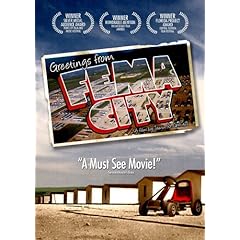
Fema City [2007] DVDRip


Synopsis:
In 2004, a trailer park was set-up in a field in Charlotte County, Florida after Hurricane Charley destroyed buildings and homes. Nearly 1,500 people moved into the more than 1,000 trailers and it took on the nickname FEMA City. It is FEMA's policy to provide free emergency housing for up to 18 months. Once displaced, residents of FEMA City found that returning to their homes and to normalcy would prove to be one of the greatest challenges of their lives. Filmmaker Jamin Griffiths takes a look at the terrible toll the storm took on the community, and the long, difficult wait of most FEMA City residents to find a foothold back in the Southwest Florida area.

Rapidshare:
Part1
Part2
Part3
Part4

Hotfile:
Part1
Part2
Part3
Part4

**Find Subtitle Here**
subscene.com
subtitlesource.org

****************************************************************************************

**Please vote this movie and leave your comment**

NOTE: Show some appreciation by clicking all the ads(nuffnang @ google) in this blog. Its really help me to improve my blog. Thanx...(^_^)


How to extract or combine file:

>>> For file with extension .001 .002 please download hjsplit here...
>>> For file with extension .a00 .a01 please download AlZip here...
>>> For file with extension .__a .__b please download file joiner splitter here...
>>> For file with extension .vnw please change it to .rar
>>> Download winrar here...

Read more

Young Yakuza [2007] DVDRip


Synopsis:
In an era where juvenile delinquency in Japan has hit an all-time high, writer/director Jean-Pierre Limosin tells the tale of an aimless twenty year-old who is faced with the choice of walking two distinctly disparate paths in life. Naoki has proven himself a miserable failure at both school and life; unemployable and socially incapable, the shiftless young man soon determines to make a name for himself in the Japanese underworld. Now, despite his mother's objections, Naoki leaves home for a yearlong apprenticeship in the Japanese Mafia. Over the course of the next twelve months, the young man who could never find his way in life will be forced to choose between devoting himself to a life of crime, and struggling to remain righteous in a world consumed by selfishness and greed.


Rapidshare:
Part1
Part2
Part3
Part4
Part5
Part6
Part7

Password: http://irfree.com

**Find Subtitle Here**
subscene.com
subtitlesource.org

****************************************************************************************

**Please vote this movie and leave your comment**

NOTE: Show some appreciation by clicking all the ads(nuffnang @ google) in this blog. Its really help me to improve my blog. Thanx...(^_^)


How to extract or combine file:

>>> For file with extension .001 .002 please download hjsplit here...
>>> For file with extension .a00 .a01 please download AlZip here...
>>> For file with extension .__a .__b please download file joiner splitter here...
>>> For file with extension .vnw please change it to .rar
>>> Download winrar here...

Read more

American Teen [2008] DVDRip


Synopsis:
In this biting cinéma vérité, director Nanette Burstein follows a group of five Indiana high-school seniors as they navigate the social mazes of adolescence, prepare for graduation, and generally deal with the often surprising and strange situations that arise simply from being 17. Incorporating intimate footage, interviews, and animation, Burstein reveals all the gritty details about life as a teenager in Midwestern America, from drugs, alcohol, and depression to cliques, first love, and heartbreak.

Rapidshare:
Part1
Part2
Part3
Part4
Part5
Part6
Part7
Part8

**Find Subtitle Here**
subscene.com
subtitlesource.org

****************************************************************************************

**Please vote this movie and leave your comment**

NOTE: Show some appreciation by clicking all the ads(nuffnang @ google) in this blog. Its really help me to improve my blog. Thanx...(^_^)


Web Hosting

Read more

Charlie Chaplin Modern Times [1936] DVDRip


Synopsis:
Charlie Chaplin bid farewell to silent comedy with this funny and poignant masterpiece. Here Chaplin stars as a factory worker fed-up with the job and his tyrannical boss (who keeps an eye on all his employees via a big-brother TV monitor). When he meets and falls in love with an orphaned street waif, the two dream of a nice suburban existence... but the cops are never far behind, chasing the vagabond couple.

Mediafire:
Click Here

Password if needed: kosovadc.com

Rapidshare:
Part1
Part2
Part3
Part4
Part5
Part6
Part7

**Find Subtitle Here**
subscene.com
subtitlesource.org

****************************************************************************************

**Please vote this movie and leave your comment**

NOTE: Show some appreciation by clicking all the ads(nuffnang @ google) in this blog. Its really help me to improve my blog. Thanx...(^_^)


Web Hosting

Read more

Ultimate Factories - Ferrari


Synopsis:
Inside Ferrari's closely-guarded factory in Maranello, Italy, you'll see how the newest, most powerful model is created from start to finish, learn its design secrets -- and take a test drive at 200 mph.


Mediafire:
Click Here

Password: narayanagame

Rapidshare:
Part1
Part2
Part3
Part4
Part5
Part6

Password: narayanagame

**Find Subtitle Here**
subscene.com
subtitlesource.org

****************************************************************************************

**Please vote this movie and leave your comment**

NOTE: Show some appreciation by clicking all the ads(nuffnang @ google) in this blog. Its really help me to improve my blog. Thanx...(^_^)


Web Hosting

Read more
Get paid To Promote at any Location
Related Posts Plugin for WordPress, Blogger...